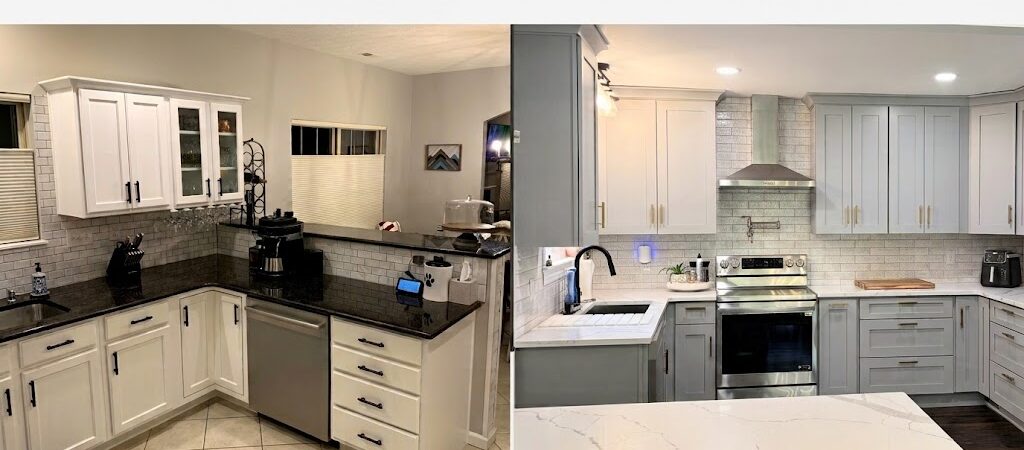
There are two types of people in this world: ones who walk into a space and love the challenge of turning the space into something they love, and ones who just want it done. We have been both!
After completing a 100% hands-on kitchen renovation in our old house and contracting out our new one, we’ve been on both sides of the coin. Here is what no one tells you about the hidden stresses, and real trade-offs of a DIY versus a professional renovation.
While hiring a pro is supposed to be the “stress-free” button, we quickly realized that trading physical sweat equity for a project manager comes with a whole new set of challenges. If you’re debating whether to pick up the paintbrush or hire a crew, here is our honest breakdown of the pros, cons, and hidden realities of both.
The Breakdown: What We Did
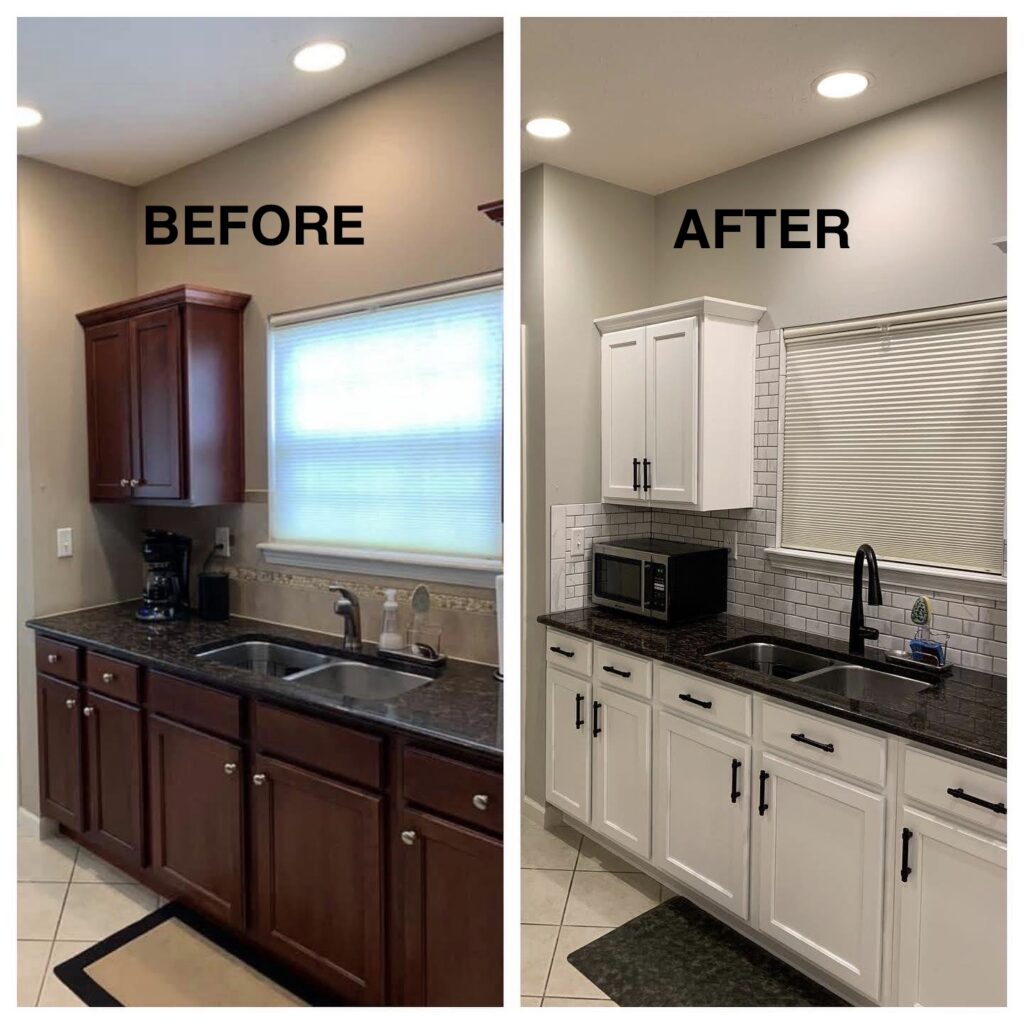
Our DIY Kitchen (Old House): We kept the existing layout and gave it a massive cosmetic overhaul. We painted the walls and painted our dark cherry cabinets crisp white, swapped out the tile backsplash for something a little less builder-grade, installed new light fixtures, upgraded cabinet pulls to two-hole handles, replaced the kitchen facet, and added custom organization inside the drawers and cabinets (cookie sheet pull-out, and custom drawer organizers).
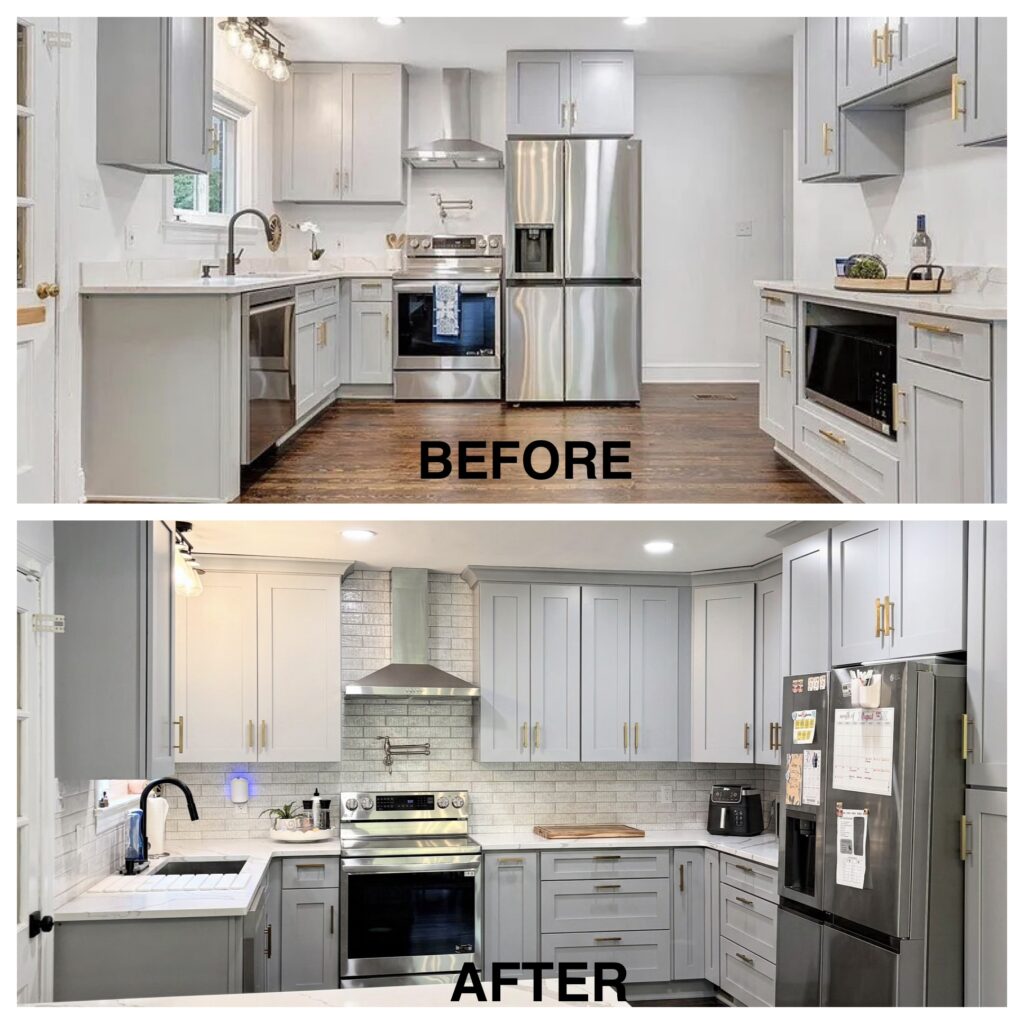
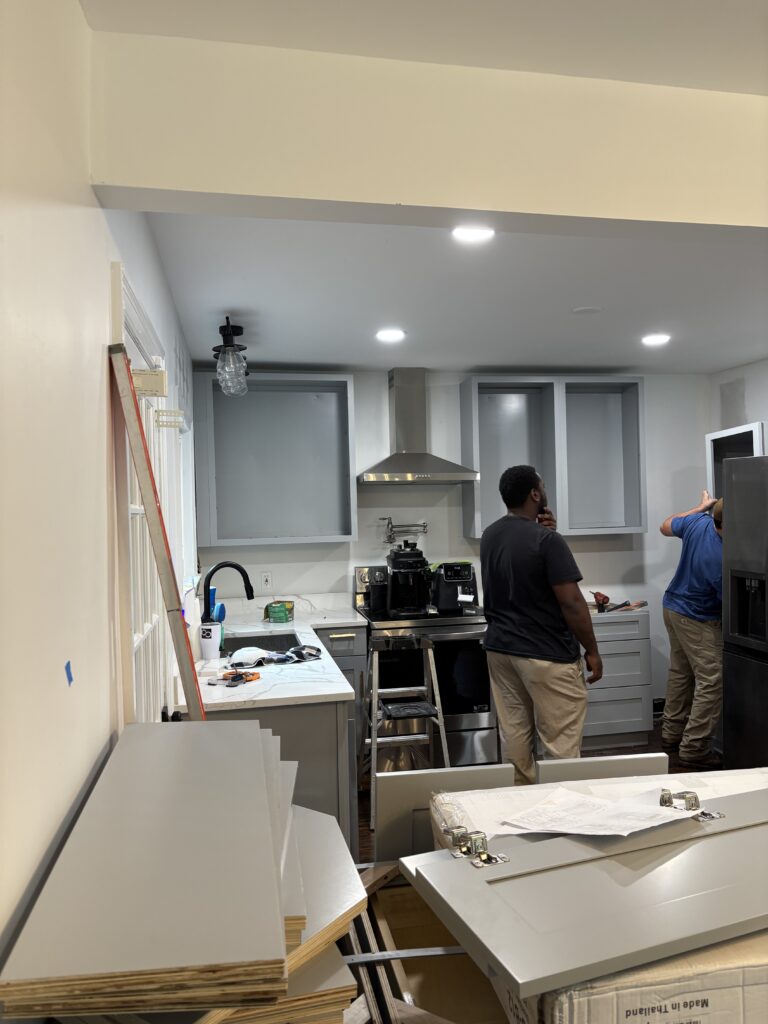
Our Contracted Kitchen (New House): We handled the demo ourselves to save on labor, but contracted out closing in a doorway, adding new cabinetry that matched the existing cabinet, installing additional countertops, running new electrical outlets, and building out internal cabinet organization (trash can pull-out, cookie sheet pull-out, utensil holder insert, and pantry drawer pull-outs)
The Upside & Downside of DIYing
Doing it yourself is a huge time commitment, especially when balancing work and family life. Progress is slower, and you have to learn as you go.
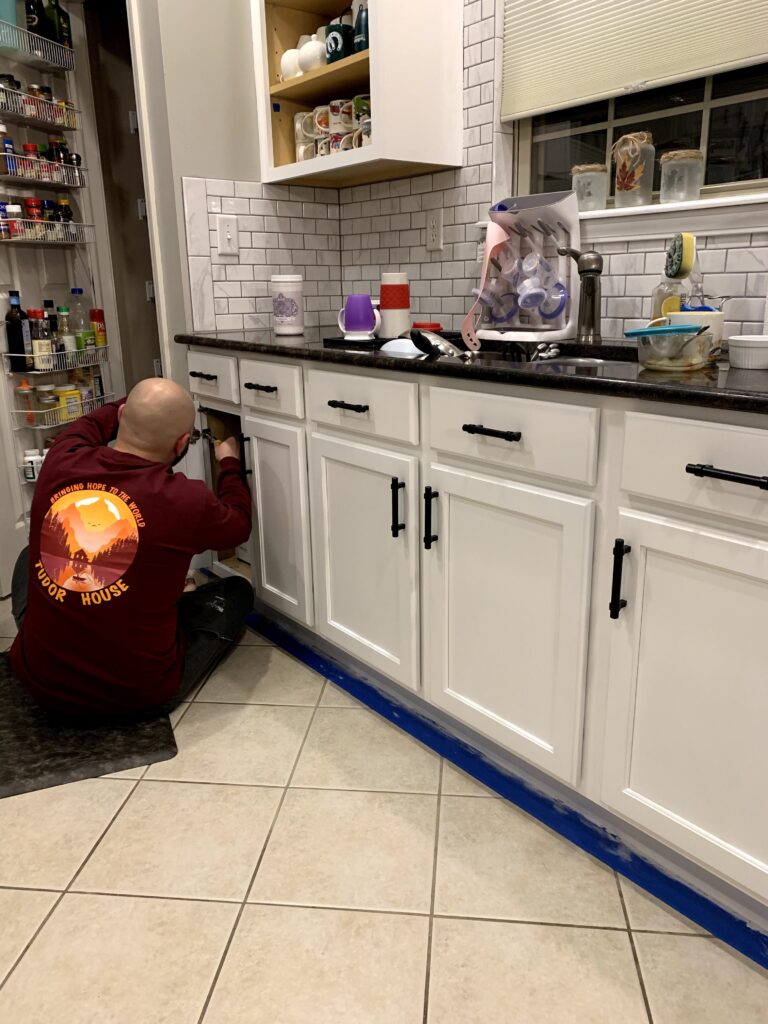
However, the major win of DIY is control. When you do the work yourself, you care about the finished product in a way a crew on a deadline never will. There’s zero middleman markup, no miscommunication, and every detail is done to your exact standard.
The “Fifth Time’s the Charm” – DIY isn’t just about saving money; it’s about trial, error, and eventual victory. Case in point: in our old house, we decided to swap out a basic ceiling fan for a chandelier over the dining room table. Simple enough, right? But as my dad always says, “It’s never as simple as it seems”!
We ended up taking that light down and rehanging it five different times. The first attempt, the wiring wasn’t threaded quite right. The next attempt, the chain was too long. By the time we finally got it hanging straight and centered at the perfect height, we were exhausted—but so proud.
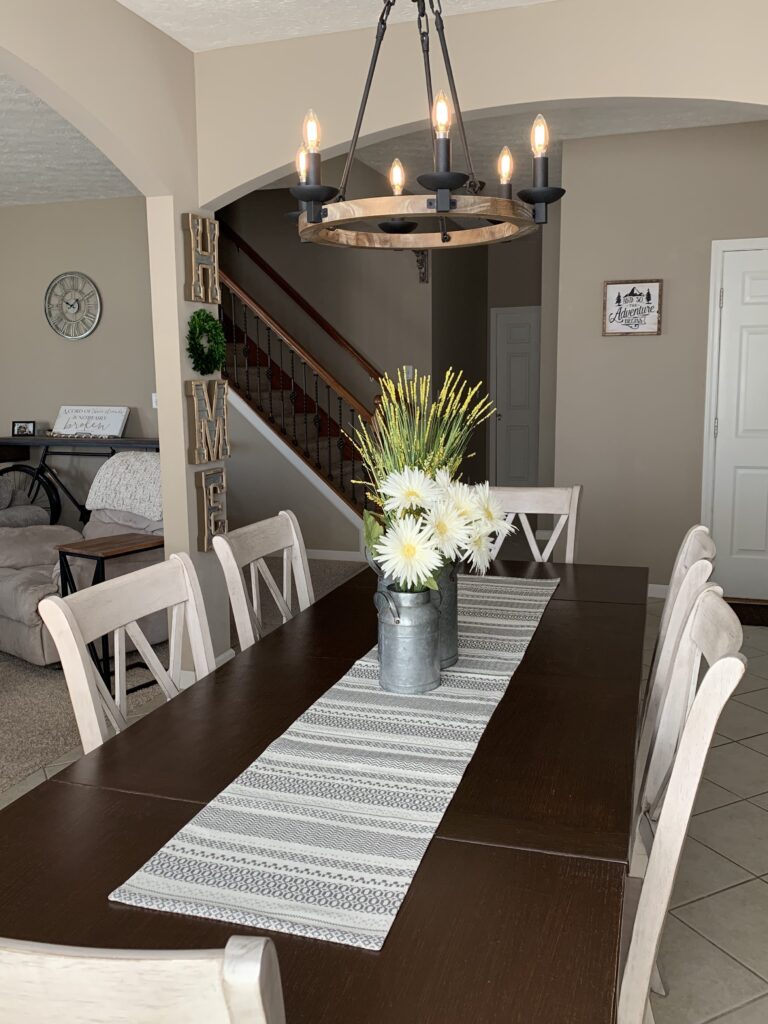
That’s the real trade-off. A electrician would have hung it in thirty minutes on the first try. But doing it ourselves meant we got it to look exactly how we wanted it, and every time we ate dinner under that light, we knew we built that experience together.
The Unfiltered Reality of Hiring Contractors
Hiring out gets the physical work off your plate, which is great, but it demands heavy oversight. Here are five big lessons we learned the hard way:
- Beware of the “I Don’t Want to Do It” Quote: We wanted a simple built-in storage bench for our dining room bay window. The quote came back at over $1,000 for a single bench. Contractors often won’t say “no” to custom, detail-heavy work; instead, they give an astronomical price so you’ll either back out (which we did, decided we could add it later) or make it worth their while. Know when a price is real versus when you’re being priced out.
- Subcontractor Upcharging: When you hire a general contractor, they often pass the work down to third-party subs—and you pay a markup on every layer. To close in a redundant doorway and fix our kitchen’s flow, we hired Contractor A. They sent Contractor B to manage it, who sent Contractor C to demo the trim and hang drywall, who finally sent Contractor D to mud and prep for paint. You aren’t just paying for materials and labor; you’re paying for every hand in that chain.
- Audit Your Contract Constantly: Toward the end of our project, we reminded the contractor about agreed-upon pantry organization, and they tried to charge us again. We had to point back to our original contract scope to prove it was already included and paid for. Read every line item carefully so you don’t pay twice for work already in writing.
- Living in a Work Zone with Kids: When you DIY, stopping to grab a toddler a snack or sitting down for lunch is seamless—you just put your tools down. But when contractors are working directly in your kitchen, accessing the refrigerator without getting in their way feels like a logistical challenge. Our crew worked straight through lunch every day—which is fantastic for progress! But when you’re home with three kids who need to eat on schedule and take naps through noisy hammer swings, the added daily stress of navigating around workers in your primary living space is a huge hidden trade-off.
- Small Functional Details Get Lost in Translation: When you DIY, you naturally test and customize how you’ll use a space every day. When you contract out, minor functional details can easily get overlooked. For example, we wanted a pull-out trash can added into our new cabinetry. We specified where we wanted it, but the contractor installed a standard cabinet door with an internal slide rather than an integrated door-mount pull-out. Now, every single time we throw something away, we have to open the cabinet door first and then pull out the trash drawer—an extra step that drives us crazy! After spending a lot of money, living with small daily design flaws because a detail was miscommunicated or installed standard-issue is frustrating.
Our Final Takeaway
If you want to save money on any remodel, demo it yourself. It’s the easiest part of a renovation to DIY without needing special trade skills.
For everything else, don’t assume hiring out means you can step away completely. Sometimes taking longer to do a project yourself actually yields a better result simply because nobody cares about the details of your home like you do!
Well Bye…May your coffee be strong and your toddlers’ tantrums be short!